Posted on

When Pressure Relief Valves Leak And What To Do

Recently there have been several claims against ‘leaking’ TPR valves. Upon testing it has been found that the relief valve is neither passing nor failing to reseat, the ‘leak’ appears to be water passing out of the blow-out cage which has opened when the easing lever has been operated too quickly during maintenance.

THE EASING LEVER SHOULD BE OPERATED SLOWLY

The purpose of the blow-out cage is to act as a ‘back-up’ relief valve which may (in certain circumstances) open when a high flow rate is passing through the TPR valve during emergency relief conditions and is normal.

Incorrectly sized or partially blocked relief drains causing back pressure may also cause the blow-out cage to activate again releasing water at the cylinder. The relief pressure of the blow-out cage is roughly 50% of the pressure rating of the TPR valve.

This new plastic device is manually resettable as opposed to the previous model which had a ‘one shot’ non-resettable metallic mechanism.

To reset the blow-out mechanism please follow the instructions belo

  1. (Fig 1) Once the water flow has ceased to turn the blow-out cage anti-clockwise to remove the device from the TPR valve body.
  2. (Fig 2) Push the valve stem back through the cage until both the stem and the washer are completely removed from the cage (a resonable amount of force will be required to push the bevelled end of the shaft through cage, lubricating oil will prevent the rubber washer from being pinched).
  3. (Fig 3) Fit the washer onto the stem and insert fully into the cage until the bevelled end ‘clicks’ back into position.
  4. (Fig 4) Fit the device into the TPR valve body and SLOWLY re-test the valve.

leaking_tpr_valves

One thing to note is that sometimes there may be a case where the valve can be genuinely faulty. Depending on age the valve may or may not be under warranty. In such cases, give us a call to book an inspection in.

Posted on

Product Review: Paloma External Gas Water Heater

Gas water heaters are becoming a more and more popular option as time goes. They provide endless instantaneous hot water without the need for a storage tank, and prove to be more energy efficient than a traditional electric water heater.

If you are looking at upgrading to a gas water heater, Paloma water heaters are an excellent option. Established in 1911, based in Nagoya, Japan, Paloma is one of the world’s largest manufacturers of gas appliances and offer an excellent solution to your water heating needs in New Zealand.

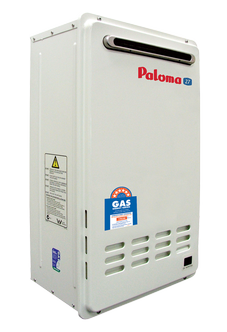
THE PALOMA EXTERNAL GAS WATER HEATER

The Paloma external gas water heater systems are compact, stylish and inconspicuous systems made to provide efficient water heating. They are designed to take up the minimal required space outdoors, resulting in minimal impact on your home and surrounds. Loaded with features to ensure efficient water heating, Paloma gas water heaters compete with the best and provide an excellent alternative to electric water heaters, with 6 star energy efficiency, instant heat at the touch of a button, precise temperature control and an endless supply of hot water for your home.

paloma_continuous_flow_external_gas_water_heaterKey features and benefits:

  • Available in 16L, 24L and 27L options
  • Hot water circulating system compatible
  • Over heat limit switch
  • Water pressure relief valves
  • Flamesafe over-heat protection system
  • Flame failure device
  • Digital diagnostic display
  • Q function
  • Error code recall
  • LPG or NG models available

Specifications

Recommended Outlets: 1-3
Litres: 16-27L
Size: 520H x 350W x 163D – 651H x 331W x 254D (mm)
Weight: 21-26Kg
Output: 27.9 kW – 40.0 kW

CONCLUSION

Gas water heaters add value to your property and reduce running costs, and the Paloma is an excellent option if you want to convert to gas. Gas water heating is becoming highly desired both for the lifestyle and cost savings provided to us here in NZ. If you would like to upgrade to a Paloma gas water heater, talk to us today!

Posted on

How Water Cylinder Theft And How To Prevent It

Did you know that hot water cylinders are a target of theft? To most people, the thought of someone stealing your hot water cylinder would be ludicrous. But it is no joke, and hot water cylinder thefts continue to rise.

hot_water_cylinder_stolenCylinder Thefts And The Resulting Problems
The main target of hot water cylinder thefts are older low pressure hot water cylinder units which contain a large amount of copper. Copper fetches a significant price over metals like steel at scrap metal merchants, as high as $7.40 per kg, which means a 180L cylinder could be worth as much as $74, placing these cylinders containing copper at the top of the list for thieves.

However, the theft of the cylinder is not the only problem. When these thefts occur, the thieves are not exactly overly concerned about what state the property is left in, and as such usually take the quickest route to removing the cylinder which involves quickly sawing or ripping pipes, letting the cylinder drain onto the floor and then removing the cylinder by force. This causes a substantial amount of damage, not only to the pipework and the area surrounding the cylinder, but extending into the rest of the house due to the flooding.

Primary targets have been older homes which are under renovation or construction and are easier to access, not occupied and are likely to have an old cylinder about. Boarded up unused houses and houses which look to have been unoccupied for a while (such as when the occupants go on holiday) are also common targets.

However, due to these thefts, it is required by law to produce ID when selling scrap metal to a metal dealer. This makes it more difficult for thieves to sell the scrap once they’ve taken it, and acts as a deterrent to minimise the amount of theft that is happening.

How To Protect Yourself
There are steps you can take to minimise the risk of your hot water cylinder being targeted by thieves. One of the best steps you can take is to make your property look occupied, even if you are going away. This could involve having a friend clear out your letterbox regularly, leaving an old car parked in the driveway or leaving a light or two on to seem like someone is home. Thieves usually target vacant homes when going for cylinders, so if it looks like someone is home it will minimise the chance that they will try your home. Always have a friend or family member check on your home regularly to ensure it is secure while you are away.

Other measures you can take include making sure your cylinder is securely strapped into its installed position. This makes removal much more difficult, and is likely to put off opportunists. For home owners with instantaneous gas water heating units installed outside, there are brackets and cages which you can install on the unit to make removal next to impossible.

Luckily, modern mains pressure hot water cylinders are usually either stainless steel or enamel, which makes them much less of a target for theft than the older low pressure copper cylinders. While this does not guarantee that your home won’t be targeted, it certainly means that the reward is far smaller and will make the break in much less worthwhile.

Always Report Theft
If you have been a victim of theft, it is always important to report it to the police, even if you believe the damage is insignificant or you believe that they won’t be able to help. Reporting crimes helps to paint a bigger picture, allowing the police to see how prevalent the problem actually is and treat it as a priority. It can lead to an investigation which could result in the apprehension of the culprit. It will also help with insurance claims, as a police report can help with the process of filing a claim.

If you would like assistance in securing your water heater or have questions about how you can prevent theft from your property, contact us today.